
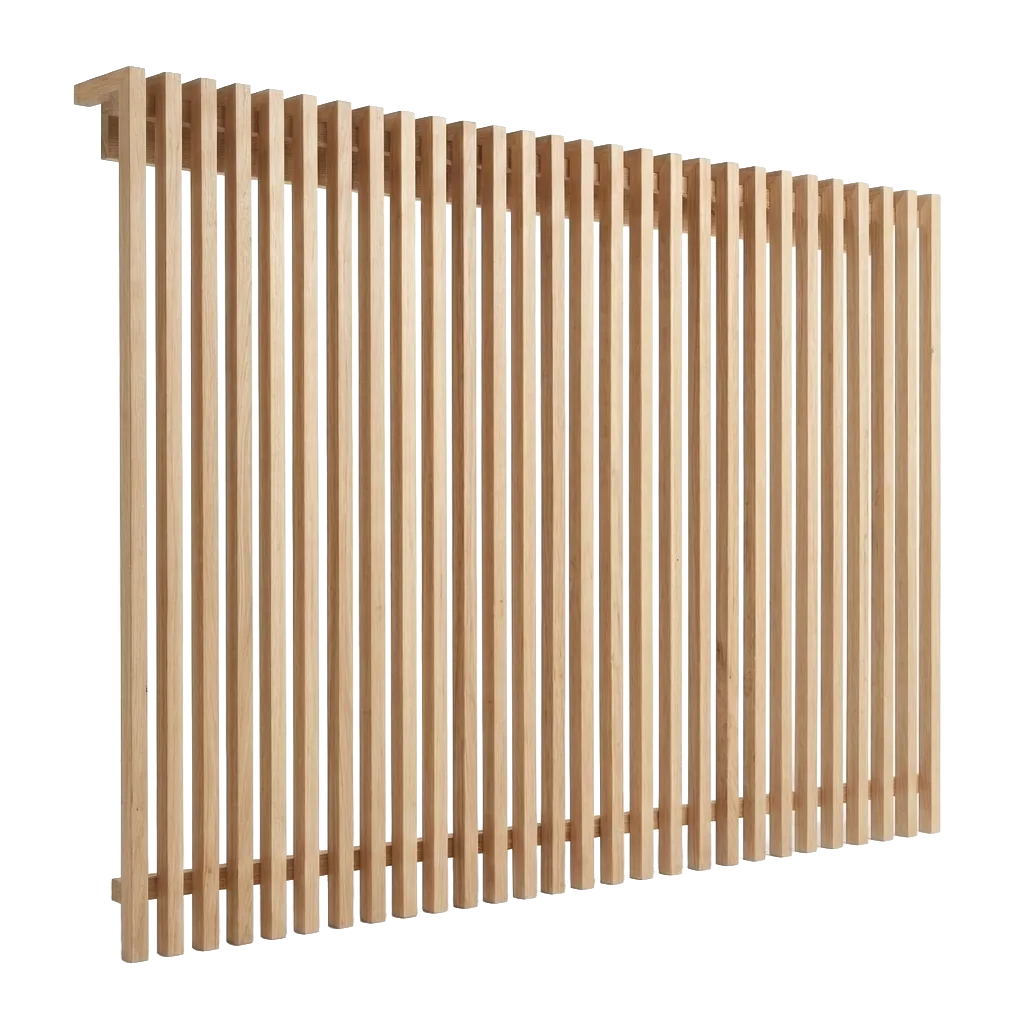
We have been building radiator covers from solid oak since 2009 — so we have heard the most common worry many times: "But next to a radiator? Surely that cracks." It is a reasonable concern. Wood and heat sound like a conflict.
The honest answer after 17 years: solid oak with a natural-oil finish does not crack. It barely changes visibly. And caring for it is far simpler than most people expect. Here is the complete guide — without the marketing gloss.
Why solid oak next to a radiator is not a problem
Wood reacts to humidity. When the air gets dry, it releases moisture and shrinks slightly. When the air gets humid, it absorbs moisture and swells. With cheap engineered boards (MDF, chipboard, veneer) this leads to visible deformation — creaking, bowing, flaking.
Solid oak behaves differently. Three properties make it the ideal material for the area around a radiator:
- Very low swelling/shrinkage rate: tangentially, oak shrinks only about 7.8 % from fully saturated (30 % wood moisture) to bone dry (0 %). Living spaces typically sit at 8–12 % wood moisture — the difference is invisible to the naked eye.
- High density (approx. 700 kg/m³): makes the wood structurally stable. Softwoods (pine, spruce) warp far more.
- Tannin content: oak naturally contains tannins that make the wood robust against pests, mould and microbes — even with fluctuating humidity.
The second decisive factor is the finish. We use no lacquer, but an oiled surface of linseed oil and carnauba wax. The advantages:
- The pores stay open and the wood can "breathe" — moisture is balanced rather than trapped
- Small discolourations or damage can be repaired locally without refinishing the whole surface
- Even after decades the wood feels warm and alive — not sealed in plastic
The three simple care rules
Rule 1: Keep humidity above 30 %
In winter, with the heating on full, relative humidity in many homes drops to 20–25 %. That is a problem not only for wood but also for your mucous membranes. Aim for 40–55 % relative humidity.
What helps:
- Short bursts of full ventilation instead of permanently tilted windows
- An open bowl of water on the radiator (decorative, but it works)
- Houseplants — especially spider plants, parlour palms and peace lilies
- In an extremely dry home: a humidifier
If your indoor air is within the normal living range, you need not worry about your oak at all.
Rule 2: No direct sunlight (long term)
UV light changes the colour of oak over the years — it lightens, sometimes with a slight yellow tint. That is not damage, but it becomes visible when one part of the surface gets strong sun and another sits in shade.
For a radiator cover under a windowsill: partial shade is fine; avoid continuous midday sun over years.
Rule 3: Re-oil at a sensible interval
This is the key point: over time the surface of oak becomes slightly drier. The natural oil is absorbed, partly evaporates and oxidises with the air. After 18–24 months you notice it: the surface feels rougher, the grain looks paler.
Then it is time for a thin coat of care oil. The whole process takes less than 10 minutes:
- Clean the surface with a slightly damp microfibre cloth and let it dry
- Put a pea-sized amount of oil on a soft cotton cloth
- Apply thinly along the grain, starting with small areas
- Let it soak in for 10 minutes, then buff with a dry cloth
- Allow 24 hours to dry before normal use (no direct contact)
BRANDSTIFTER service: On request we send every customer a free 50 ml bottle of our care oil — enough for 3–4 years of normal use. An email to [email protected] with the keyword "care oil" is all it takes.
If something does happen
Water mark
Dab immediately with a dry cloth, do not rub. It usually disappears by itself within 1–2 days. If a ring remains:
- Lightly sand the spot with 240 grit along the grain
- Wipe with a damp cloth and let it dry
- Re-oil thinly and buff
Scratch
Surface scratches: rub over them with a dry thumb — really. The oils in your skin even out the sheen. Deeper scratches: sand, dampen, re-oil.
Dent / pressure mark
Classic trick: lay a damp cloth over the spot and briefly press a medium-hot iron on it. The steam makes the wood swell back. With oak this often works surprisingly well.
Heat mark / discolouration
Rare — only happens with direct contact with very hot objects. Solution: sand lightly and re-oil. If the discolouration sits deep: oil twice, the second coat a little thicker.
What the care does NOT need
- No furniture polish: silicone-based polishes seal the pores and make later re-oiling impossible.
- No lacquer: lacquering over a natural-oil surface loses every advantage (breathability, repairability, feel) and gains nothing.
- No aggressive cleaners: glass cleaner, vinegar cleaner or ammonia-based products attack the wood.
- No constant polishing: excessive polishing with cloths or pastes creates differences in sheen that are hard to even out later.
Day to day, this is enough: wipe once a week with a slightly damp microfibre cloth, and apply a thin coat of care oil every couple of years. The wood will not be any happier with more.
The long view: why oiled solid oak lasts for decades
We have customers who still use their first BRANDSTIFTER cover from 2009 every day. Seventeen years. The surface has developed a beautiful patina — no longer quite as pale as new, but with more depth. The grain is more pronounced.
Let us compare that with the alternatives:
| Material | Typical lifespan | Care effort | Repairable? |
|---|---|---|---|
| MDF with foil coating | 3–8 years | wipe only | No |
| Veneer on chipboard | 5–12 years | wipe only | Worn veneer = ruined |
| Lacquered solid-wood furniture | 10–20 years | re-lacquer every 5–10 years | only the whole surface |
| Oiled solid oak | Decades | 10 min every 2 years | Locally, without limit |
Oiled solid oak is the only one of the four materials that can be repaired after 30 years exactly as after one. You can sand it, re-oil it, change its colour, adapt it to a new home. It stays the same piece of furniture. With a history.
Frequently asked questions
Does oak crack next to a radiator?
Practically never. Oak has a very low swelling/shrinkage rate, and at normal indoor humidity (30–60 %) there are no visible changes.
How often do I need to re-oil?
In a living room every 18–24 months. Close to the radiator or in direct sunlight, roughly once a year. In a bathroom every 9–12 months.
Which oil is the right one?
Ideally the same oil the wood was finished with in the workshop. At BRANDSTIFTER: linseed oil with carnauba wax. Free on request. Alternatively, a high-quality wood oil based on linseed or walnut oil.
What do I do about a water mark?
Dab it dry immediately, do not rub. If a ring remains: sand lightly, treat with oil. Oak is very forgiving.
Can I clean it with furniture polish?
No. Silicone-based polishes destroy the open natural-oil layer. Use a slightly damp microfibre cloth or water with a dash of pure soap.
What about scratches?
Rub out surface scratches with your thumb (skin oil evens out the sheen). Sand and re-oil deeper scratches. Solid oak is one of the hardest European woods and very forgiving.
Related articles: Oak vs MDF compared · Build or buy? · The heat-loss myth