
In 17 years as a workshop in Ober-Mörlen we have met many customers who painted first — and then covered anyway. The other order almost never happens. Why, we explain here without sugar-coating.
Option 1: Painting the radiator
Painting is the obvious solution: the radiator looks ugly, so it gets a coat of colour. Materials cost little, the effort is manageable, and by the end of the weekend it is done. So the theory goes.
What you need
- Radiator paint based on alkyd resin or acrylic (1 litre ≈ €15–25, enough for 1–2 standard radiators)
- Radiator primer (€8–15)
- Angled radiator brush (€10–20)
- Sandpaper, 120–240 grit (€5–8)
- Cleaner (acetone or silicone remover, €5–10)
- Masking material, gloves, respiratory protection
Total materials: €45–80 — if you have none of it at home.
How to do it properly (short version)
- Let the radiator cool down for at least 6 hours
- Remove rusty spots with a wire brush or sandpaper
- Sand the entire surface with 240 grit — especially between the ribs
- Degrease with acetone or silicone remover
- Apply primer evenly, let it dry for 4 hours
- Apply paint in two thin coats (12 hours drying time between coats)
- Only turn the heating back on after 48 hours
Time required: 4–6 hours of active work plus 2–3 days of drying. Skip step 1 or 2 and you get flaking after 6–12 months.
The problem with painting
It does not make the radiator disappear. It only makes it one colour. A white column radiator remains a column radiator — now in a colour matching the wall. The shape, the depth, the visible valves, the industrial character: all of it stays.
And: radiator paint behaves differently from wall paint. It has to withstand temperature swings between 0 °C and 70 °C for years. Even the best paints show the first yellowing or micro-cracks after 5–7 years. Then the cycle starts again.
Option 2: Covering the radiator
Covering means: the radiator stays what it is — a heater. But it disappears behind a piece of furniture that shapes the room. A good cover turns a functional object into an architectural element.
Three classes of cover compared
| Variant | Price | Heat loss | Lifespan |
|---|---|---|---|
| Discount MDF box | €80–200 | 15–30 % | 3–8 years |
| Veneered wood cover | €150–400 | 10–20 % | 5–10 years |
| Solid oak, workshop-made | from €229 | max 4 % | Decades |
The price gap looks large — until you do the maths. An MDF box that has to be replaced after 5 years costs at least €480 over 30 years (6 replacements at €80). A solid oak cover lasts the same period without intervention. For €229, once.
Why an open slatted design
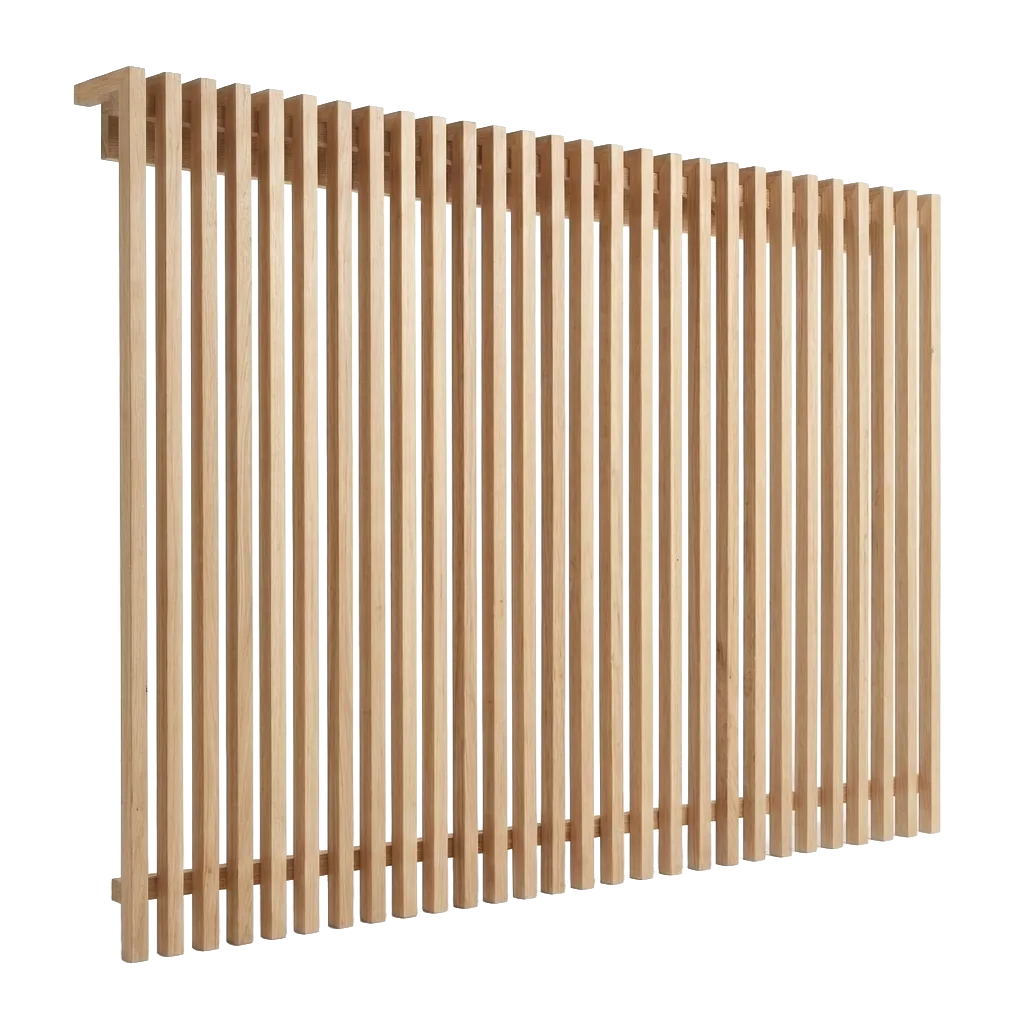
We build our covers with vertical 18 mm slats at an exact spacing so warm air can circulate freely. Closed MDF covers block precisely this convection — and then the radiator mainly heats the inside of the furniture.
With our open construction, up to 96 % of the original heat output is retained. Anyone who would lose energy with a radiator cover has chosen the wrong construction — not the wrong solution.
Head-to-head comparison
| Criterion | Painting | Solid oak cover |
|---|---|---|
| Direct material cost | €45–80 | from €229 |
| Active effort | 4–6 hours | 15 min assembly |
| Drying / waiting time | 48 h without heating | 0 h |
| Effect in the room | radiator in another colour | radiator disappears |
| Heat output | −10 to −15 % with dark colours | max −4 % |
| Lifespan of the result | 3–7 years until redoing | decades |
| Effect when selling the home | €0 | adds value as furniture |
| Removal / taking it with you | not possible | take it with you any time |
When each option really makes sense
Painting is the right choice if …
- … the radiator is already ugly AND you only want a cosmetic refresh
- … you live in a rented flat you will leave in 1–2 years
- … the radiator is very small (e.g. a bathroom towel rail)
- … the budget absolutely has to stay under €100
- … you want to do a single job at the weekend without buying anything new
Covering is the right choice if …
- … you live in your own flat or house
- … the radiator is in a period home and its shape disturbs the feel of the room
- … you are renovating anyway and the result should last 10+ years
- … you want a design element, not just concealment
- … you value material quality and avoid MDF furniture as a rule
The honest calculation
The most common feedback we hear from new customers is not "the furniture is beautiful" — but: "I should have done this five years ago, I have painted so many times."
A standard radiator cover in size München (100 × 60 × 18 cm) costs €319 with us. Assembly: 15 minutes, no tools. Lifespan: well beyond the time you own the home. Result: the radiator in the room becomes an architectural detail.
For the calculation "painting would be cheaper" you would need a radiator that only has to be painted once in 30 years. There is no such radiator.
Our suggestion: Start with a standard size in the living room. 10 sizes from €229 — ready to ship. If you have unusual dimensions (period home, cast iron radiator), use the configurator for a bespoke piece in 12–14 working days.
Frequently asked questions
Can I simply paint my radiator myself?
Yes — with radiator paint, careful preparation and about 4–6 hours. Materials cost €45–80. Important: do not cut corners on sanding and priming, or the paint will not hold.
How long does a painted radiator last?
3–7 years, then the first flaking and yellowing begins. With heavy use (bathroom, conservatory) even earlier.
Do I lose heat output with a cover?
With a closed MDF cover 15–30 %. With an open slatted cover in solid oak, up to 96 % is retained.
What about paint smell and pollutants?
Alkyd-based radiator paint smells for about 14 days and releases VOCs in the first weeks. If you are sensitive, switch to water-based acrylic systems. With a natural-oil-finished oak cover this issue disappears entirely.
Is it worth doing both — painting first, then covering?
No. What disappears behind the cover does not need a nice colour. If you already know a cover is coming, skip the painting entirely.
Related articles: 7 ways to hide a radiator · Oak vs MDF · Redesigning period radiators